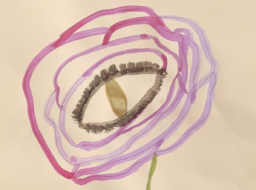
A Metaphor for Curriculum & Consciousness


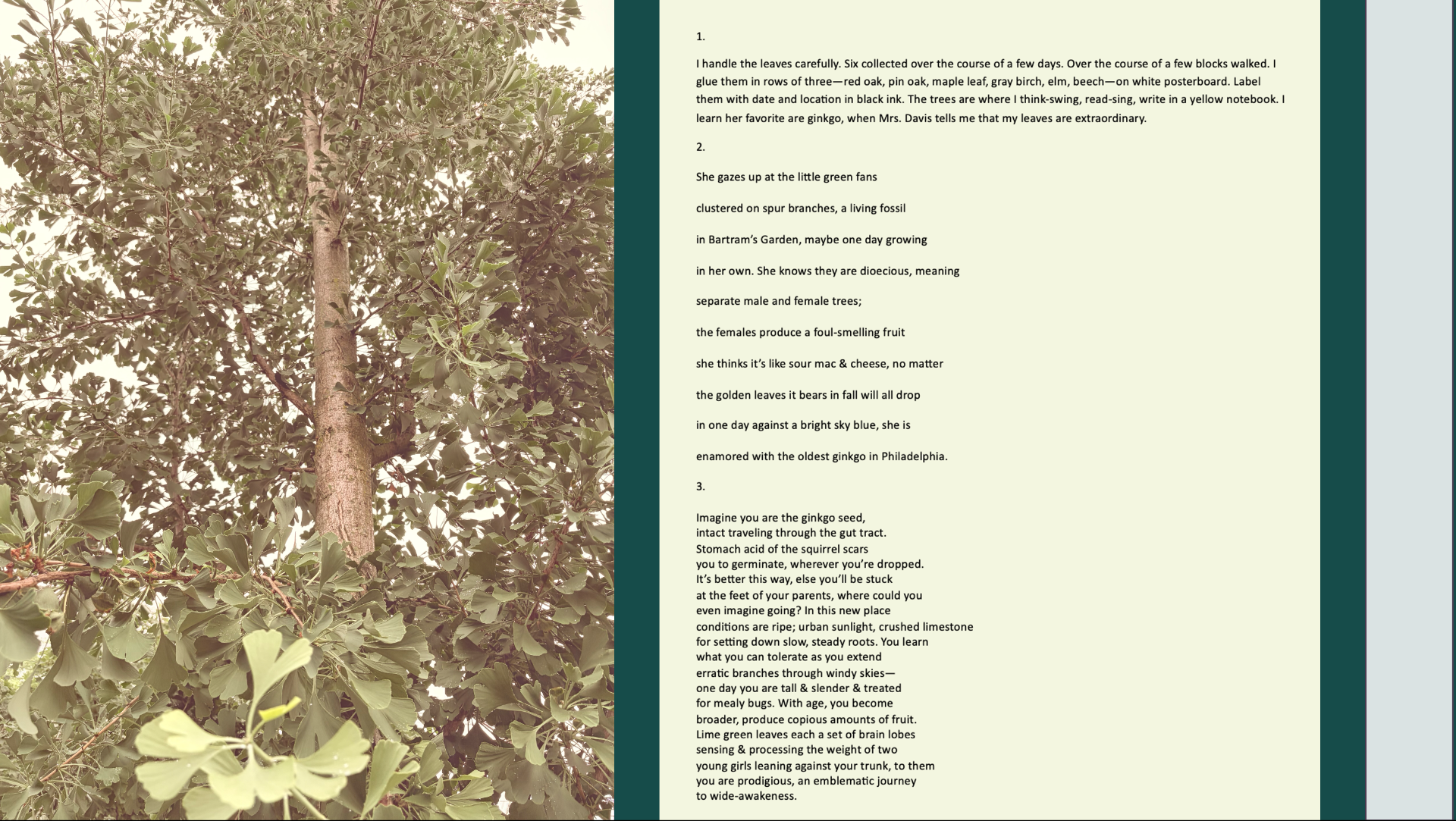
As I learned about ginkgo trees for writing this poem, I started to see a connection between the life cycle of the ginkgo tree and what Maxine Greene writes about consciousness in relation to curriculum:
The ginkgo tree relies on an animal to eat its fruit and disperse the seed intact. As the seed travels through the animal’s intestines, its stomach acid "scars" the seed so it can germinate. This is akin to Greene’s assertion that consciousness requires disruption or a break from passivity. Without this journey, the seed falls close to its parent tree and is less likely to sprout and survive. This circumstance is akin to Greene’s assertion that to achieve “wide-awakeness,” we must remain alert and engage with the world critically. Here, too, we can think of what Dewey referred to as the “social consciousness,” an awareness of the self within community. Greene says the curriculum must be presented as possibility, and Dewey claims more precisely that when lessons are part of the life experience of the person, the person realizes capabilities that bring her into the social consciousness.
References
Dewey, J. (2022). My pedagogical creed. In D. J. Flinders & S. J. Thornton (Eds.), The curriculum studies reader (pp. 33–40). Routledge.
Greene, M. (2022). Curriculum and consciousness. In D. J. Flinders & S. J. Thornton (Eds.), The curriculum studies reader (pp. 153–165). Routledge.